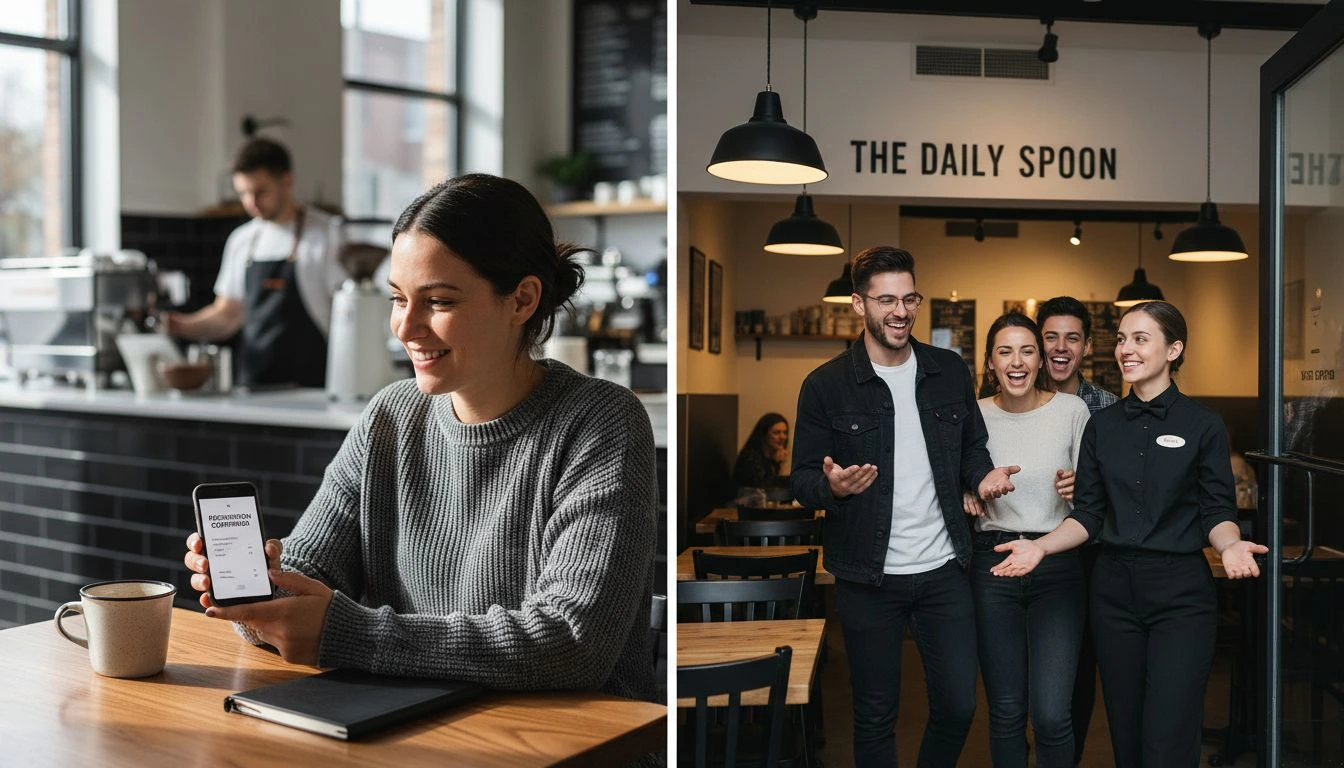
Over half of restaurant bookings now happen online, yet walk-ins still account for a large share of daily guests. Deciding how to handle reservations versus spontaneous arrivals has a direct impact on table turnover, staffing, and guest satisfaction. Whether you run a busy bistro or a fine dining spot, knowing the real differences between these two methods helps you shape a smoother dining experience for everyone who walks through your door.

Table of Contents

Defining Online Reservations and Walk-Ins

Restaurant dining has transformed dramatically with the emergence of digital booking technologies. Online reservations and walk-ins represent two distinct approaches to securing a table at a restaurant, each with unique characteristics and implications for both guests and establishments. According to Wikipedia, a table reservation is a pre-arranged agreement to have a specific table available at a restaurant, whereas walk-ins are guests who arrive spontaneously without prior booking, hoping for immediate seating. This fundamental difference creates varied experiences and operational challenges for restaurants. Online reservations leverage digital platforms to enable guests to book tables remotely, often providing additional benefits such as:

  • Ability to select specific time slots

  • Option to view restaurant availability in real-time

  • Potential access to reviews and ratings

  • Opportunity to review menu options before arrival

Walk-ins, by contrast, represent a more traditional dining approach where guests arrive at a restaurant without pre-booking, relying on immediate table availability. Journal of Politeknik Bosowa research suggests this method remains popular in many dining scenarios, particularly for casual or spontaneous dining experiences. Understanding the nuances between online reservations and walk-ins is crucial for restaurant managers seeking to optimise their table turnover with an online reservation system. Each approach offers distinct advantages and challenges that can significantly impact a restaurant’s operational efficiency and customer satisfaction.

Key Differences in Guest Experience

The guest experience in restaurant dining varies dramatically between online reservations and walk-in approaches, with each method offering distinct advantages and potential challenges. Digital booking and spontaneous arrival represent two fundamentally different paths to enjoying a meal out. MDPI research highlights that online reservations typically provide guests with broader choices and enhanced convenience compared to traditional walk-in experiences. This digital approach allows customers to:

  • Review restaurant details beforehand

  • Select preferred seating times

  • Access menu information in advance

  • Potentially secure special accommodations

Walk-in guests, by contrast, experience a more spontaneous dining journey. They rely on immediate table availability and make real-time decisions about their dining experience. This approach offers excitement and flexibility but comes with potential uncertainties like longer wait times or limited seating options. For restaurant managers seeking to deliver exceptional customer service, understanding these experiential differences becomes crucial. Online reservations provide predictability and planning, while walk-ins introduce an element of unpredictability that can be both challenging and refreshing for guests. The choice between online reservations and walk-ins ultimately depends on individual preferences, restaurant capacity, and the specific dining context. Some guests appreciate the structured approach of digital bookings, while others enjoy the spontaneity of arriving without prior arrangements. Successful restaurants learn to accommodate and optimize both experiences seamlessly.

Impact on Restaurant Operations and Staffing

Online reservations and walk-ins fundamentally transform how restaurants manage operational workflow and staff scheduling, creating unique challenges and opportunities for hospitality teams. The transition from traditional seating methods to digital booking systems represents a significant shift in restaurant management strategies. Restaurant managers must adapt their staffing models to accommodate both reservation types. How to improve restaurant staff performance becomes critical when dealing with unpredictable guest arrival patterns. Online reservations provide more predictable staffing needs, allowing managers to:

  • Schedule precise numbers of servers

  • Plan kitchen preparation in advance

  • Allocate staff more efficiently

  • Reduce potential overstaffing or understaffing

Walk-in scenarios, by contrast, introduce significant operational uncertainty. Staff must remain flexible, ready to rapidly adjust table configurations, manage wait times, and handle sudden influxes of guests. This requires a more dynamic approach to personnel management, with employees trained to quickly adapt to changing restaurant conditions. The operational impact extends beyond immediate staffing concerns. Successful restaurants learn to integrate both reservation methods seamlessly, creating a fluid system that maximizes table turnover and guest satisfaction. By developing robust strategies that accommodate both online bookings and spontaneous arrivals, restaurants can optimize their operational efficiency and create a more responsive dining environment.

Benefits and Challenges for Hospitality Businesses

The landscape of restaurant and hospitality management is continuously evolving, with online reservations and walk-in strategies presenting a complex array of opportunities and potential pitfalls for businesses. Understanding this dynamic environment requires a nuanced approach to guest management and operational planning. MDPI research highlights that online reservations can significantly enhance customer satisfaction through convenience, while simultaneously introducing operational challenges such as managing overbookings and last-minute cancellations. The benefits for hospitality businesses include:

  • Increased predictability of customer flow

  • Advanced planning capabilities

  • Reduced wait times for guests

  • More accurate staffing and resource allocation

  • Potential for collecting valuable customer data

However, these digital systems are not without drawbacks. Restaurants must carefully navigate restaurant challenges by developing robust strategies that balance technological convenience with human flexibility. Walk-ins, while less predictable, offer their own unique advantages such as spontaneity and the potential for unexpected revenue during slow periods. Successful hospitality businesses recognize that both reservation methods have their place in modern dining ecosystems.

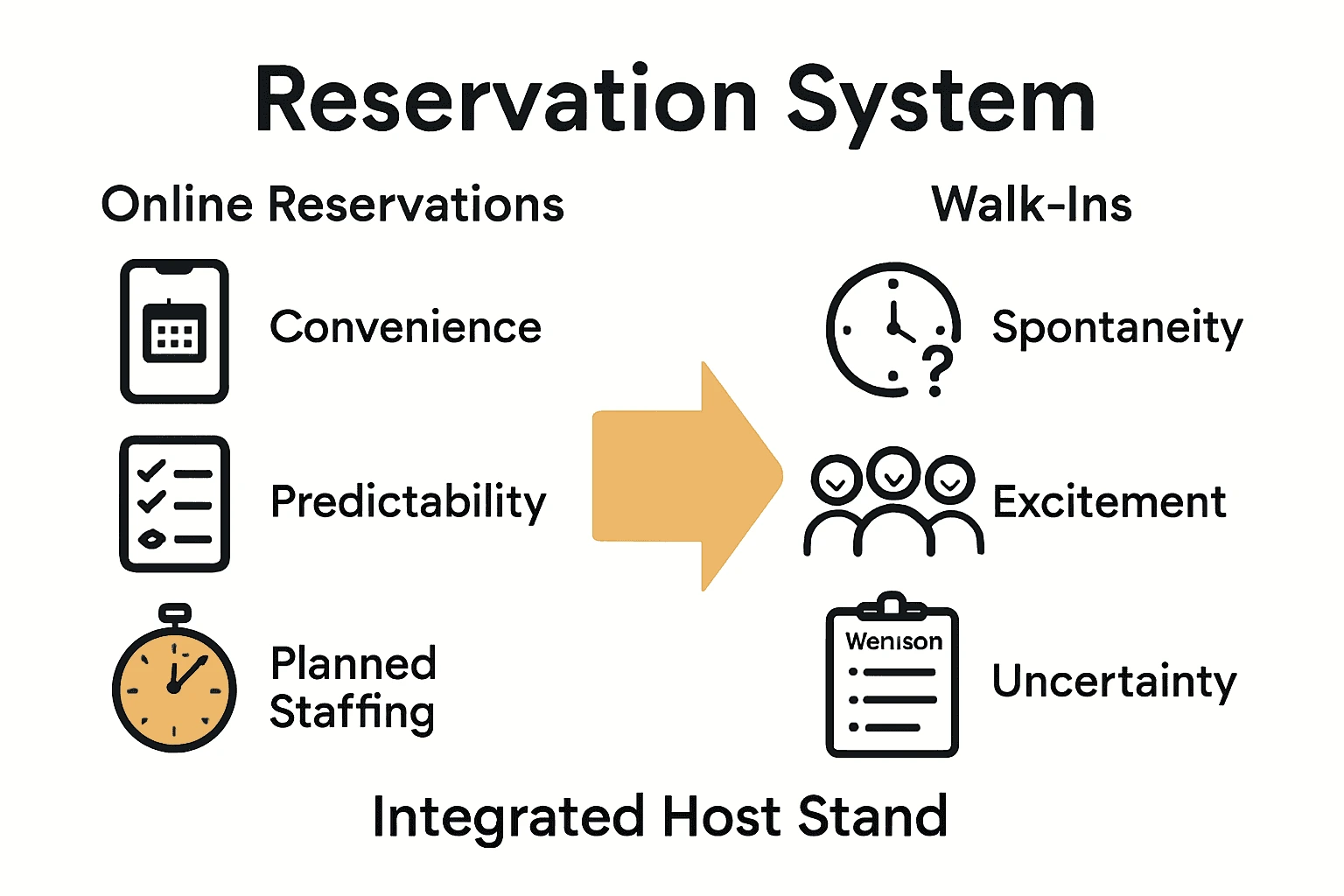
Comparison infographic of online reservations and walk-ins, highlighting key benefits and challenges for restaurants. The key lies in creating adaptable systems that can seamlessly integrate online booking technologies with the traditional warmth of walk-in hospitality, ultimately providing guests with a comprehensive and satisfying dining experience.

Best Practices for Integrating Both Approaches

Successful restaurant management requires a sophisticated approach to blending online reservations and walk-in services, creating a flexible and responsive dining environment. The key lies in developing a comprehensive strategy that leverages the strengths of both reservation methods while mitigating their potential limitations. To effectively integrate these approaches, restaurants should build the best team capable of handling diverse booking scenarios. This involves implementing a multi-faceted approach that includes:

  • Implementing a robust reservation management system

  • Training staff to handle both digital and spontaneous bookings

  • Creating flexible seating arrangements

  • Developing clear protocols for managing different reservation types

  • Maintaining real-time communication channels

Restaurants must design their operational workflow to accommodate sudden changes and unexpected guest arrivals. This means maintaining a buffer of available tables for walk-in guests while simultaneously honoring pre-booked reservations. The goal is to create a seamless experience that doesn’t compromise the quality of service or guest satisfaction. Ultimately, the most successful hospitality businesses view online reservations and walk-ins not as competing approaches, but as complementary strategies. By developing adaptable systems that can smoothly transition between digital bookings and spontaneous arrivals, restaurants can maximize their operational efficiency, optimize table turnover, and create a more dynamic dining environment that meets the diverse needs of modern guests.

Transform Your Reservation Challenges into Seamless Opportunities

The article highlights the modern clash between online reservations and walk-ins, emphasising how unpredictability in guest arrivals and operational demands can weigh heavily on restaurant managers. Pain points such as managing fluctuating guest flows, optimising staff scheduling, and balancing customer convenience with operational efficiency are very real challenges in today’s hospitality world. If you recognise the need to reduce no-shows, automate bookings across multiple channels and keep real-time control over table availability, then an integrated solution is key. Discover how Tableo tackles these issues head-on by offering a fully featured platform designed to streamline reservation management and empower your team. With tools like digital floor plans, smart guest profile tracking, automated email and SMS reminders, plus seamless online booking integrations, Tableo helps optimise your dining room whether guests book ahead or arrive spontaneously. Take control now and create a dining experience that delivers predictability, flexibility and increased guest satisfaction. Ready to transform your restaurant operations and boost bookings today? Visit Tableo and explore how to optimise your table turnover with an online reservation system.

Frequently Asked Questions

What are online reservations and how do they work?

Online reservations allow guests to book tables at a restaurant through digital platforms in advance. This process enables customers to select specific time slots, view real-time availability, and even review menu options before their arrival.

What benefits do walk-ins offer compared to online reservations?

Walk-ins provide spontaneous dining experiences without the need for prior booking. They offer excitement and flexibility, allowing guests to make real-time decisions about where and when to dine, although they may face uncertainties like longer wait times.

How do online reservations impact restaurant operations?

Online reservations help restaurants streamline their staffing and resource allocation by providing predictability in customer flow. This allows managers to schedule staff more effectively, plan kitchen preparations, and reduce potential overstaffing or understaffing issues.

What are the challenges of managing both online reservations and walk-ins?

Managing both online reservations and walk-ins requires restaurants to be adaptable. While reservations provide predictable guest flow, walk-ins introduce unpredictability that can lead to operational challenges, such as handling sudden influxes of guests and managing wait times efficiently.

image1

Unlock the tips that will help you stand out from the crowd and get more bookings!

stress-free-restaurant-management

Learn how to save time, reduce stress and fill your restaurant while you sleep!

Picture of <h4 style="font-family: 'Montserrat', sans-serif;">Stephanie Paris

Stephanie Paris

Gen-Z marketing coordinator bringing fresh energy to web and graphic design, with a weekend habit of chasing adventure.